6 Aug 2026
Cascading Benefits: How Tiered Incentives Influence Mobile Activity in Verified Casino Systems

Layered incentives in verified casino ecosystems create measurable shifts in how users interact with mobile platforms, according to industry reports released in mid-2026. These structures typically combine welcome bonuses, ongoing free spin allocations, deposit matches, and loyalty tier upgrades that activate sequentially based on play volume and frequency. Data from multiple jurisdictions shows mobile sessions extending when initial rewards unlock secondary offers, while participation rates climb as players progress through progressive reward levels.
Regulatory frameworks in places like Nevada and several Australian states require clear disclosure of these layered systems, which helps maintain transparency across operator networks. Observers note that when one incentive triggers the next, mobile engagement metrics often rise in tandem, particularly among users who access platforms through dedicated apps rather than browsers. Studies from research institutions indicate this pattern holds across different demographic groups, though the duration of increased activity varies by reward type and regional rules.
Mechanics of Sequential Reward Activation
Operators structure incentives so that completing one requirement automatically qualifies a player for the next tier, which researchers describe as a chain reaction within the ecosystem. A typical sequence might start with a deposit match that credits free spins, followed by those spins generating loyalty points that unlock higher cashback percentages. Figures from Canadian provincial gaming authorities reveal that mobile users who reach the second or third layer in such sequences tend to log in more frequently over subsequent weeks compared with those who stop after the first reward.
August 2026 saw several North American operators adjust their mobile apps to display real-time progress toward the next incentive layer, a change that coincided with updated reporting standards from state regulators. This visibility appears to sustain player momentum, as users receive notifications when thresholds near completion. Industry analyses from European trade groups further suggest that verified platforms using these progressive systems experience steadier daily active user counts than those relying on isolated promotions.
Mobile-Specific Patterns in Verified Environments
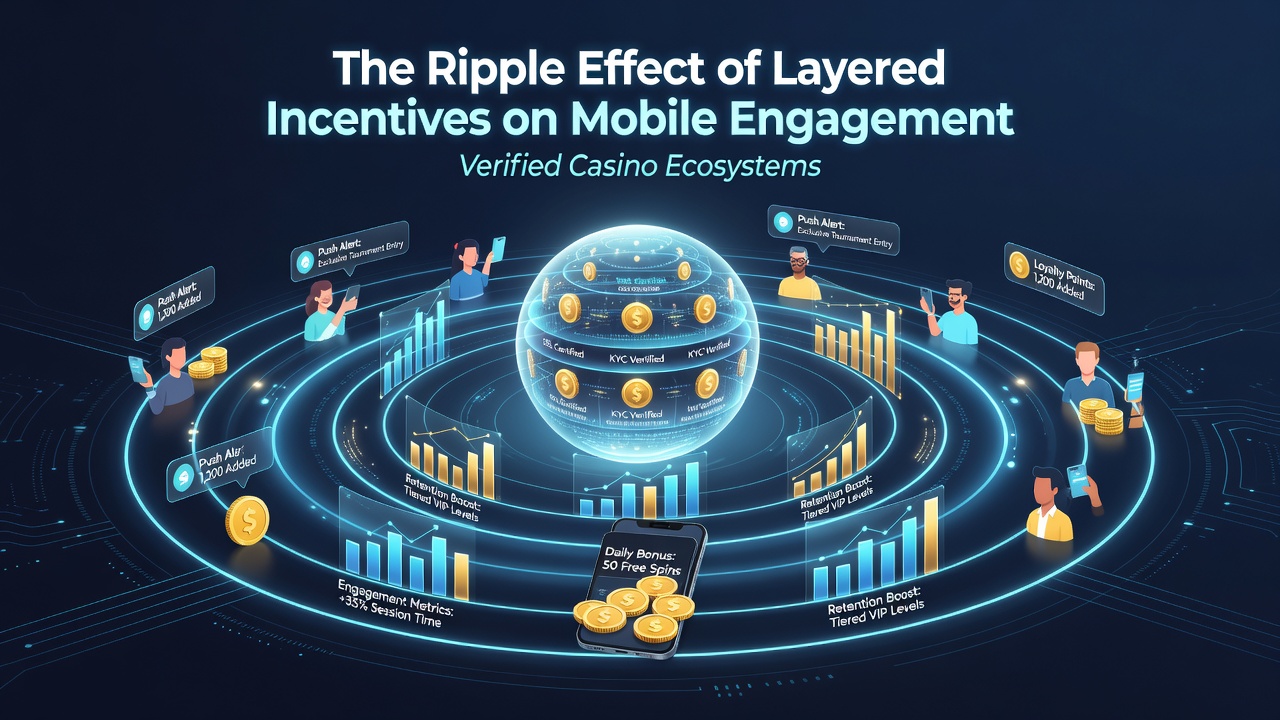
Mobile engagement responds distinctly to layered incentives because push notifications and in-app tracking allow immediate feedback on reward progress. Data compiled by academic researchers at institutions studying digital entertainment shows that session lengths increase when users can track multiple active bonuses simultaneously on a single dashboard. In verified ecosystems, where age verification and payment authentication occur upfront, players move more readily from initial rewards into sustained play patterns without interruption.
One analysis of Australian market data highlighted how tiered VIP structures, when paired with mobile-exclusive spin offers, produced higher retention rates among users who had already completed the base incentive layer. The same study noted that cross-device continuity mattered, with players who started on mobile adn continued on tablet showing the strongest response to the cumulative effect of stacked rewards.
Regulatory Context and Data Tracking
Authorities in multiple regions mandate that operators report engagement metrics tied to incentive programs, which provides aggregated insights into how layered systems affect behavior. The Malta Gaming Authority, for instance, collects quarterly figures on mobile participation linked to progressive reward structures, while similar oversight exists through bodies in New Jersey and several Canadian provinces. These reports consistently show that verified platforms maintain higher compliance rates when incentive layers include responsible gaming prompts at each transition point.
What's interesting is how geographic differences shape outcomes. In jurisdictions with stricter affordability checks, the ripple from one reward layer to the next tends to produce more moderate increases in session frequency, whereas markets with lighter oversight record sharper spikes. Trade association summaries from the United States emphasize that transparent layering reduces player confusion and supports steadier engagement curves across verified operators.
Interaction Between Layers and User Retention
Retention improves when successive incentives align with mobile usage habits, such as shorter but more frequent sessions during commute hours. Research indicates that players who receive a loyalty boost after completing free spin rounds often return the following day to activate the next stage. This pattern creates a compounding effect, where each completed layer reinforces the likelihood of continued mobile access.
Operators track these transitions through anonymized data sets that regulatory bodies review for compliance. Reports from academic sources in the United Kingdom and Singapore demonstrate that verified ecosystems using multi-stage incentives see lower rates of one-time mobile downloads compared with platforms offering single promotions. The sequential nature appears to convert initial curiosity into recurring activity more effectively when users can visualize the full reward path.
Conclusion
Layered incentives generate observable ripple effects on mobile engagement within verified casino ecosystems, as documented across regulatory reports and research summaries from diverse regions. Sequential activation of rewards correlates with extended session patterns and improved retention metrics, particularly when mobile interfaces display clear progress indicators. Data from authorities in Nevada, Australia, Malta, and Canadian provinces illustrates consistent trends while highlighting regional variations tied to oversight intensity. As platforms continue refining these structures through 2026, the documented connections between incentive layers and user behavior remain central to understanding mobile activity in regulated environments.