30 Jul 2026
Player Advancement Through Multi-Tiered Promotions Spanning Mobile Slots and Dealer Tables
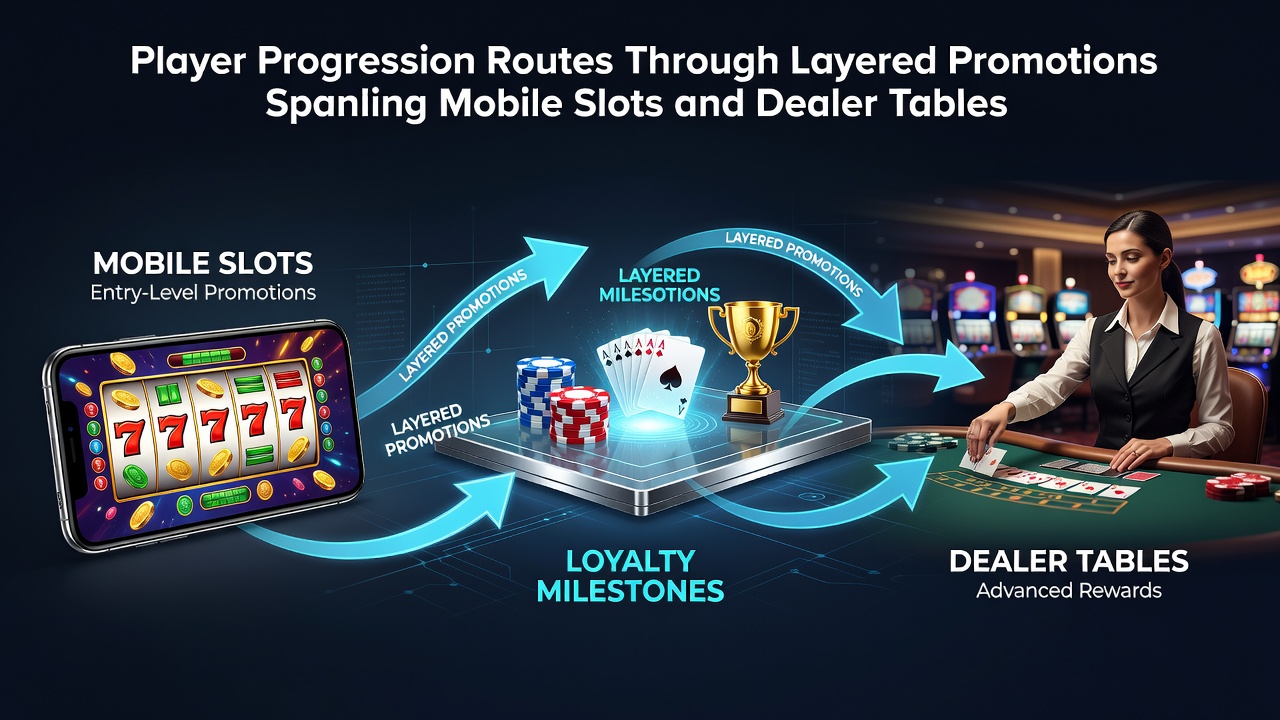
Players often begin their journeys in mobile slots environments where initial welcome packages and free spin allocations establish early engagement patterns, and these starting points frequently connect to broader systems that reward consistent activity with access to higher-value features. Data from regulatory bodies across multiple regions shows that structured promotion layers encourage movement between game types, with operators tracking metrics such as session length and deposit frequency to determine when individuals qualify for escalated rewards.
Entry Points via Mobile Slot Incentives
Mobile platforms deliver the first layer through no-deposit offers and matched deposits that allow users to test various slot titles without immediate financial commitment, and these mechanisms create measurable pathways because play data feeds directly into loyalty algorithms. Research indicates that participants who engage with initial slot promotions accumulate points at rates that unlock secondary tiers, including cashback percentages and additional spin bundles, while operators monitor participation to adjust thresholds in real time.
Those who've examined industry reports note that July 2026 brought updated tracking tools in several markets, enabling finer segmentation of player groups based on mobile activity alone, and this refinement supports smoother transitions when users meet criteria for live table invitations. Figures from the Canadian Gaming Association reveal steady growth in cross-format participation when layered rewards align slot milestones with table entry conditions.
Building Through Successive Reward Layers
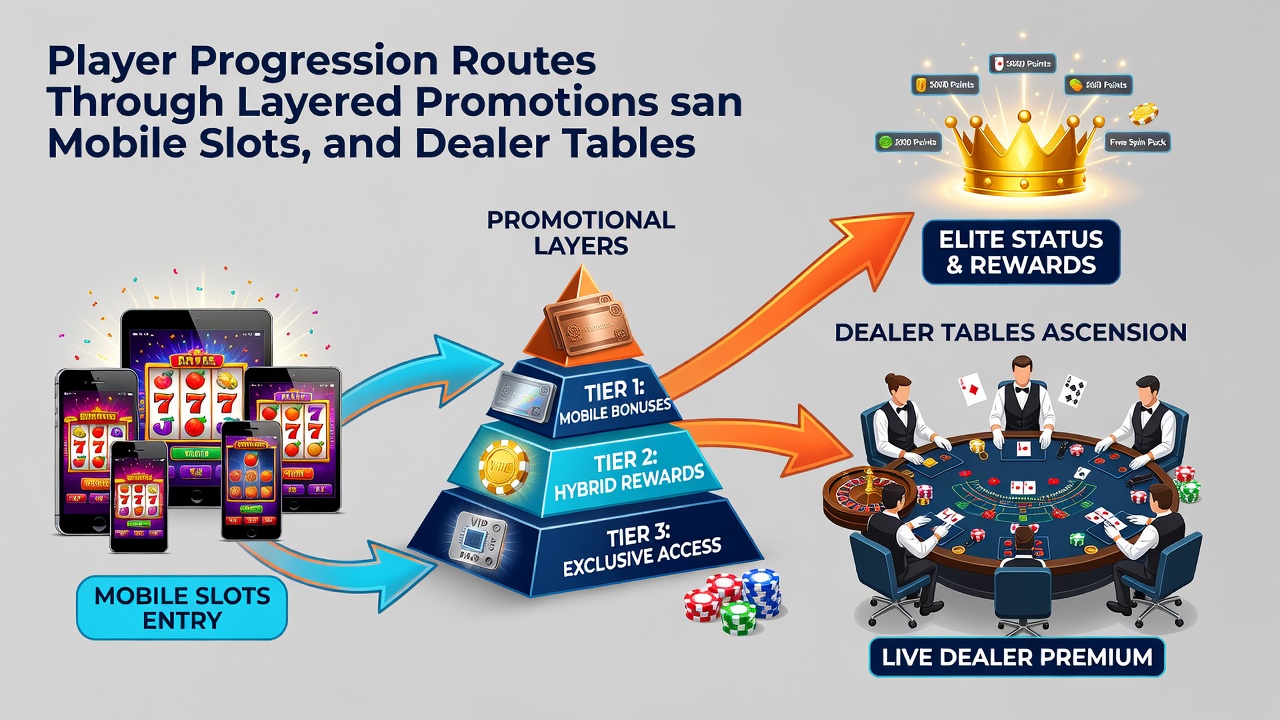
Subsequent tiers incorporate reload bonuses, tournament entries, and progressive loyalty multipliers that build on slot performance, and these elements connect because accumulated data determines eligibility for dealer table promotions such as reduced rake or dedicated host services. Operators apply consistent rules across formats so that slot volume contributes to overall standing, allowing players to advance without resetting progress when shifting to live environments.
What's interesting is how these systems handle volume thresholds, since reaching a certain number of spins or total wagers automatically triggers table access codes, and external analyses confirm that such automation reduces friction for participants moving between categories. One study from the University of Nevada Las Vegas Gaming Research Center highlighted that integrated tracking across slots and tables increases retention when promotions scale in direct proportion to activity levels.
Transition Mechanisms to Dealer Tables
Live dealer sections activate once slot-derived points reach specified benchmarks, and this activation often includes tailored entry bonuses such as matched table stakes or priority seating that maintain momentum from earlier stages. Systems in place during July 2026 incorporated real-time dashboards that displayed remaining requirements for table unlocks, giving users clear visibility into their current standing within the overall structure.
Evidence from the Australian Institute of Criminology's gambling research series demonstrates that clear linkage between slot layers and table rewards correlates with balanced participation across both formats, and operators achieve this balance by applying identical point valuation rules regardless of game type. Players who meet combined volume targets gain access to private tables and customized promotions that extend the original mobile slot incentives into higher-stakes settings.
Operational Tracking and Market Patterns
Regulatory frameworks in various jurisdictions require transparent reporting on how promotions connect different game categories, and July 2026 updates emphasized standardized metrics for cross-format progression to ensure compliance while supporting operator flexibility. Industry organizations such as the European Gaming and Betting Association have compiled datasets showing that layered systems maintain steady participation when mobile slots serve as reliable entry points to dealer experiences.
Those monitoring these patterns observe that point conversion rates between slots and tables remain consistent across licensed platforms, which reduces confusion for users and supports predictable advancement routes. Data from Ontario's iGaming framework further illustrates that integrated promotion layers produce measurable shifts in player distribution when slot activity directly feeds table eligibility.
Conclusion
Layered promotions create defined routes that start in mobile slots and extend to dealer tables through structured reward accumulation, and operators implement these systems with data-driven thresholds that update according to regulatory and market developments observed in July 2026. External sources including academic studies and regional gaming associations continue to document how such connections influence participation patterns across licensed environments.